


Missing the delivery of just one critical legal document could put your business at risk for a default judgment, where a court automatically rules against you simply because you didn’t respond in time. For many entrepreneurs forming an LLC or corporation, choosing a registered agent seems like a routine formality, but this decision can be the difference between protecting your business and facing severe consequences.
If your registered agent fails to receive or forward important legal papers, like a lawsuit or subpoena, you might never know there’s an issue until it’s too late. A default judgment can allow creditors or plaintiffs to seize your assets, garnish your wages, or force you to pay damages, all without your side ever being heard. In some cases, your bank accounts, business property, or even your interest in the company could be at risk.
Keeping your registered agent information up-to-date isn’t just a formality—it’s essential for business compliance and avoiding legal and financial disaster.
A registered agent acts as the designated contact for accepting legal documents and government correspondence, such as lawsuits, subpoenas, and tax notices. By law, every formal business entity, like an LLC or corporation, must designate a registered agent, ensuring the business can be reliably reached for important legal matters. The registered agent’s name and address become part of the public record, playing a vital role in legal service, privacy protection, and ongoing compliance.
In this article, we’ll explore what a registered agent does, how they benefit business owners and how to select a dependable registered agent.
Key Takeaways
Registered agents are legally required for all LLCs, corporations, and formal business entities in every state where they operate
Missing legal documents can be costly - failure to receive lawsuits or notices can result in default judgments and financial penalties
Professional registered agent services offer superior protection - they provide privacy, ensure availability during business hours, and use systematic processes to prevent missed deadlines
Same-day notification prevents disasters - professional registered agents scan and forward documents immediately to keep your business compliant and protected
Key Responsibilities of a Registered Agent
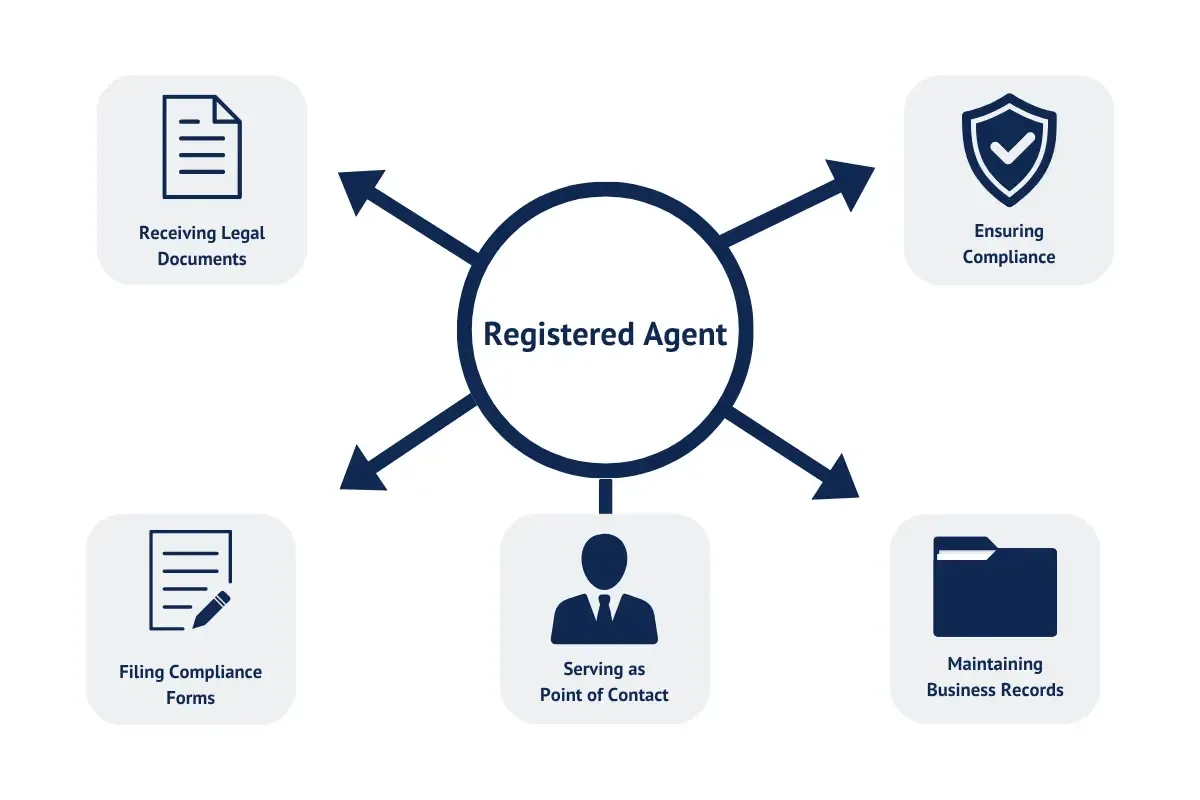
A registered agent performs critical functions that keep your business legally compliant and properly informed. They are responsible for receiving service of process and other important legal and government documents on behalf of the business.
Receiving Legal Documents
Your registered agent receives all legal documents served on your business, including service of process (official notice of a lawsuit or legal action), as well as subpoenas and court summonses. This process serves as legal proof that your business has been notified of legal action. A process server may deliver these documents directly to your registered agent to ensure proper notification. Once received, legal deadlines start immediately, so prompt handling and forwarding by your registered agent is crucial. Timely action ensures your business can respond to legal papers without missing important deadlines.
Handling Government Correspondence
Registered agents are the designated point of contact between state and federal agencies and your business. They receive official correspondence such as government notices and compliance documents, annual report notices, tax forms, and compliance reminders. Professional registered agent services often provide automated alerts about filing deadlines, helping businesses avoid penalties or administrative dissolution.
Maintaining Accurate Records
Many professional registered agents organize key business documents in digital format and ensure that registered agent information is kept accurate and up-to-date for compliance purposes. This includes formation documents, annual reports, and legal notices. Maintaining organized records supports business transparency and provides legal protection through proper documentation.
Ensuring Timely Delivery of Documents to Business Owners
Professional registered agents scan documents immediately upon receipt and notify clients electronically, ensuring they receive critical information the same day. This prevents missed deadlines that could result in default judgments or compliance violations, as professional services ensure documents are delivered in a timely manner.
Forwarding Compliance Reminders
Commercial registered agent services monitor filing deadlines and send automated reminders for annual reports and license renewals. This prevents lapses that could lead to penalties or loss of good standing, and these reminders help businesses stay compliant with state regulations.
Why Your Business Needs a Registered Agent
Having a registered agent isn’t optional—it’s a legal requirement in all 50 states that serves important protective purposes. Every formal business entity must have a registered agent appointed to receive legal and official documents.
Legal Compliance Requirements
State laws require LLCs, corporations, and other formal business entities to designate and maintain a registered agent in each state where they operate to ensure business compliance.
The Colorado Secretary of State explains: “Almost all entities on record with the Secretary of State must have a registered agent listed with a Colorado address, even if their business is located in a different state. Failing to appoint and maintain a registered agent can result in severe penalties for the entity and, sometimes, its owners.”
Peace of Mind
You can protect your privacy by hiring a professional registered agent service. Instead of your personal address, the registered agent’s address is listed in public records and used for all official communications. A professional service also ensures someone is always available during business hours to receive legal documents and important notifications. This helps you avoid missing critical deadlines and prevents process servers from showing up at your home.
Ensures Timely Responses to Lawsuits or Notices
Effectively responding to lawsuits or other legal notices requires swift action to avoid default judgments or other penalties. By using a professional registered agent service, businesses can be confident that important time-sensitive documents will be received and handled promptly, reducing the risk of missing critical deadlines or legal actions.
As Thomson Reuters notes, "You could be subject to a default judgment because you did not receive notice and defend your interests. The risk of starting a lawsuit off on the wrong foot is not one anyone would recommend taking."
What's the Difference Between a Statutory Agent and a Registered Agent?
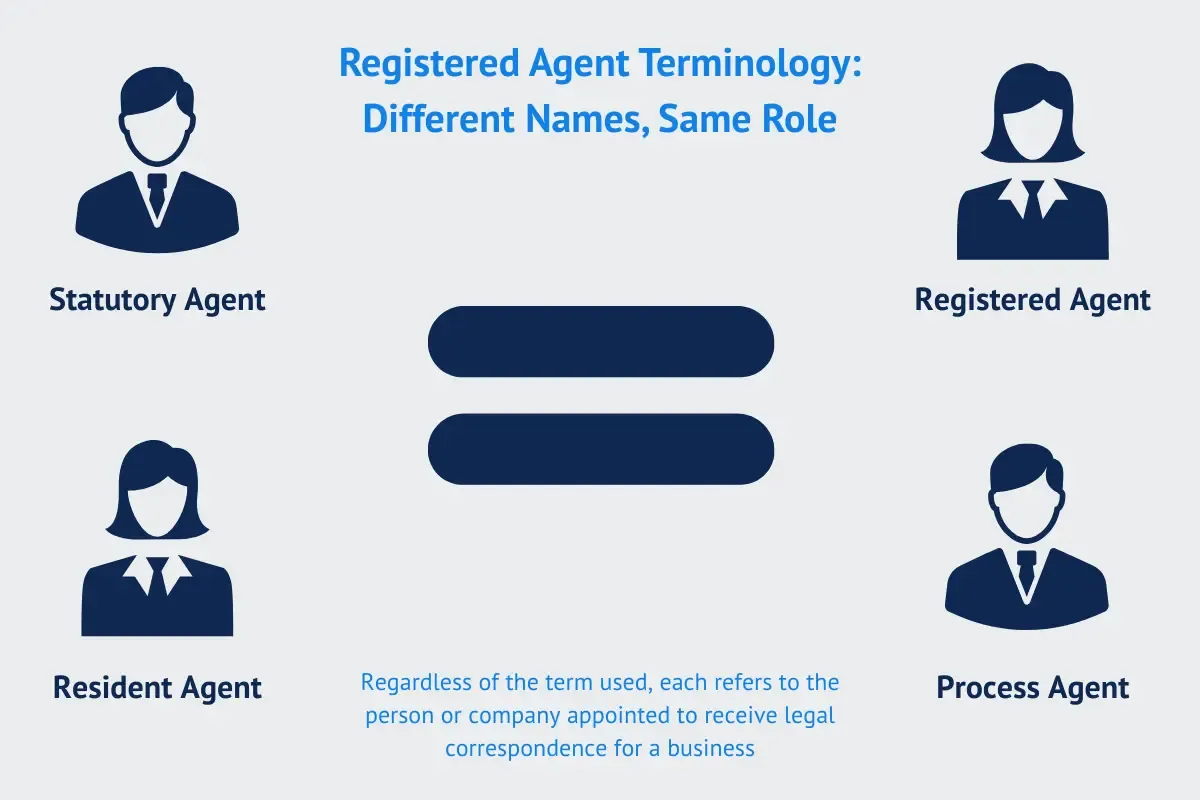
There's no practical difference—these terms are interchangeable. The specific term used depends on the state. Some states refer to this role as "resident agent," "agent for service of process," and "process agent," all referring to the individual or entity designated to receive legal documents on behalf of a business.
LLC vs. Corporation: What Changes for Your Registered Agent?
A corporation's registered agent and an LLC's registered agent have fundamentally the same core responsibilities. The exact rules and terminology may vary depending on the entity type and state law. Ultimately, limited liability companies, corporations, limited partnerships, and limited liability partnerships all require a registered agent.
Differences by Business Structure
Corporations typically have more frequent reporting obligations than LLCs. The business structure you choose affects your compliance requirements. Corporations may receive more correspondence related to annual reports, while LLCs have simpler ongoing requirements.
Filing and Formation Support
Many registered agent services assist with initial business formation by providing pre-filled forms and streamlining the filing process. For LLCs, this includes submitting the Articles of Organization, while for corporations, it involves filing the Articles of Incorporation. They also coordinate directly with the business entity filing office in your state to ensure the proper submission of documents. Additionally, professional registered agent services help with ongoing filings, amendments, and annual reports, helping businesses stay compliant with state requirements.
Privacy and Availability Considerations
Both LLCs and corporations benefit from privacy protection through professional registered agents. The registered agent's registered office address, not your personal or business address, is listed publicly, which helps protect your privacy by keeping your personal information out of public records. The registered agent must also be physically present at the registered office during normal business hours to receive and handle legal documents. This arrangement is especially valuable for home-based businesses seeking privacy, business owners who travel frequently, and companies operating in multiple states.
Benefits of Using a Professional Registered Agent Service
Professional registered agent services offer significant advantages over DIY approaches, providing added convenience, reliability, and peace of mind for business owners.
Privacy Protection
Professional services use their address as your registered office, which serves as the official point of contact for legal and government communications. This keeps your personal address private from public records and solicitors. Documents are delivered to discreet office locations during normal business hours rather than your home or business location.
Meeting Legal Obligations
Professional agents specialize in compliance requirements and provide automated tracking systems to monitor your business's obligations. This helps prevent administrative dissolution or penalties for missed deadlines.
Flexibility with Location and Hours
Professional services maintain staffed offices during regular business hours to ensure important documents are always received—even if you're unavailable. These regular (or standard) business hours typically cover the core part of the workday, such as 9 a.m. to 5 p.m. This reliability helps businesses avoid missed legal notices and ensures you can conduct business smoothly, no matter your schedule or location.
As SCORE notes, "A registered agent not only needs a physical location, but they need to be available during regular business hours to accept service of process and official notices from the state. Some business owners who aren't available during business hours opt for registered agent services, so they can maintain irregular work hours."
Avoiding Missed Deadlines or Lawsuits
Acting as your own registered agent comes with potential drawbacks, such as privacy concerns and the risk of missing important legal documents—which can lead to serious legal consequences.
Professional registered agents use systematic processes for immediate document scanning and electronic notification. The risks and consequences of missed deadlines—default judgments, administrative dissolution, and penalties—make professional registered agent services like InCorp an easy choice.
Choose the Right Registered Agent for Your Business
Business owners can help ensure legal compliance and peace of mind by choosing the right registered agent for their business. Your choice should be based on reliability, reputation, and high-value services at competitive pricing. If you plan on expanding your business into multiple states, look for a company that provides registered agent services nationwide. Keep in mind the essential role a registered agent plays in business operations and compliance. Look for a service that offers same-day document scanning, secure online portals, responsive customer service, and other business services you might need.
FAQs
Disclaimer
This content is intended for general educational and informational purposes only and does not constitute legal, tax, or accounting advice. Every effort is made to keep the information current and accurate; however, laws, regulations, and guidance can change, and no representation or warranty is given that the content is complete, up to date, or suitable for any particular situation. You should not rely on this material as a substitute for advice from a qualified professional who can consider your specific facts and objectives before you make decisions or take action.
Stay Informed!
Sign up to receive important updates, helpful resources, and special offers.