


Switching registered agent providers can often lead to better service, enhanced compliance monitoring and significant cost savings. However, most business owners stick with their first choice simply because they assume changing a registered agent is complicated and risky. The reality is you can switch registered agent providers easily when you follow the right process.
A registered agent, sometimes called a statutory agent or resident agent, serves as your business's official point of contact for legal notices and government correspondence. Every business entity, whether a domestic corporation, foreign corporation or limited liability company, must appoint and maintain a registered agent with a physical address in each state where it operates.
This article provides a clear step-by-step guide to help you switch registered agent providers legally and smoothly across most U.S. states. With professional providers that offer nationwide coverage, switching registered agents can be simpler than most business owners expect.
Why Businesses Switch Registered Agent
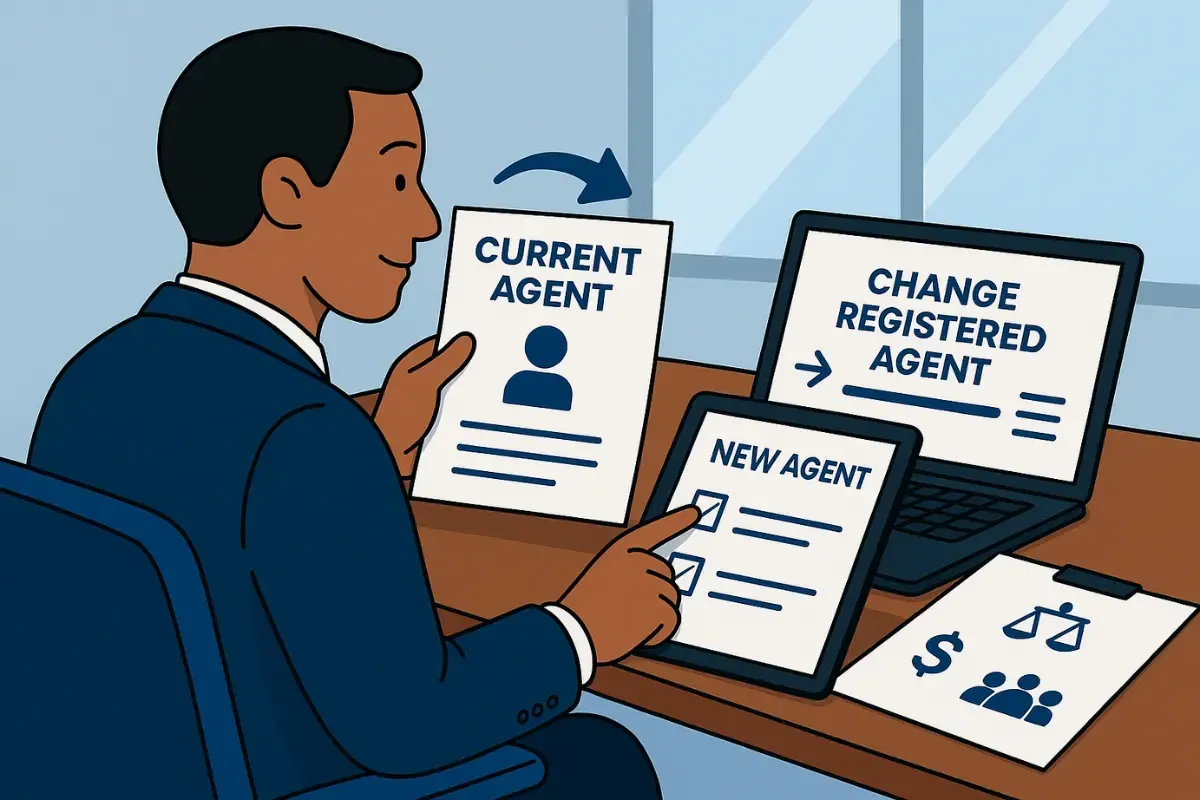
There are several reasons business owners choose to change their registered agent. Whether you're relocating your business headquarters, frustrated with inconsistent service or have been acting as your own registered agent and want a more reliable option, working with an established provider can offer long-term stability and stronger compliance support.
Business Relocation
Many business owners switch registered agents when relocating to or expanding into a new state, as you must appoint a registered agent authorized to operate in that jurisdiction. State laws require every business entity to maintain a registered agent with a physical address in each state where it is set up or active. This ensures that government agencies and courts can reliably serve legal documents and official notices during regular business hours.
According to the U.S. Small Business Administration, "If your LLC, corporation, partnership, or nonprofit corporation conducts business activities in more than one state, you might need to form your business in one state and then file for foreign qualification in other states where your business is active." Filing for foreign qualification simply means registering your business so that you can operate legally beyond your home state.
Many national registered agent services, such as InCorp, offer services in all 50 states. This makes it much easier for businesses expanding across state lines to maintain compliance, since you don't have to find and manage a separate agent in each jurisdiction.
Additionally, some business owners who have been serving as their own registered agent from their personal address but are now moving may want to consider switching to a professional registered agent service. As Stripe explains, "If you move and forget to update your registered agent address with the state or you miss important legal paperwork, your business could be deemed noncompliant." Owners in this situation will need to update their registered agent info regardless, so it may be a good opportunity to upgrade to a commercial provider.
Better Features with Other Providers
One reason you might want to switch your company's registered agent is the varying levels of support and services that different providers offer. While some providers focus on basic mail forwarding, others deliver comprehensive compliance support that can significantly improve business efficiency and reduce legal risks.
Advanced features such as compliance reminders, online dashboards and multi-state service help businesses stay organized and avoid costly penalties. For example, digital dashboards, real-time alerts and secure document portals provide easy access to important compliance information and documents. Systems like EntityWatch offer these capabilities, enabling companies to monitor their multi-state compliance needs effectively.
By choosing a registered agent service with robust digital tools and proactive support, businesses can streamline operations, maintain good standing and focus more on growth rather than administrative burdens.
Business Growth
As businesses grow or expand into multiple states, their compliance requirements naturally become more complex. Along with growth comes an increased risk of legal disputes and regulatory challenges. Ensuring you have a reliable registered agent equipped with the necessary compliance tools helps manage this risk and protect your company's reputation and resources.
A registered agent suitable for a single-state operation may not have the infrastructure to efficiently support multi-state filings. Growing companies often switch to nationwide registered agent providers that centralize compliance management and simplify filings across all jurisdictions.
Understanding what happens if you don't have a registered agent becomes increasingly important as your operations grow, underscoring the need for a dependable agent to maintain good standing and avoid legal penalties or business disruptions.
Agent Resignation
Sometimes businesses use an individual registered agent, such as an employee, accountant or attorney. If this person resigns, the business must act promptly to appoint a replacement. When a business's registered agent resigns, companies risk missed service of process, undelivered government correspondence and compliance violations that can lead to penalties, the loss of good standing or even administrative dissolution.
Professional registered agent providers offer fast onboarding and seamless transitions to prevent gaps in coverage during urgent changes. Quickly appointing a new agent and filing the required forms with your state ensures continuous compliance and protects your business from legal and financial risks.
Prerequisites Before Making the Switch
When changing your registered agent, proper preparation helps prevent delays, legal penalties and service interruptions. Taking a few necessary steps beforehand ensures your transition proceeds smoothly and your business maintains uninterrupted compliance. The following sections outline what you need to address before making the switch.
Review Your Current Service Agreement
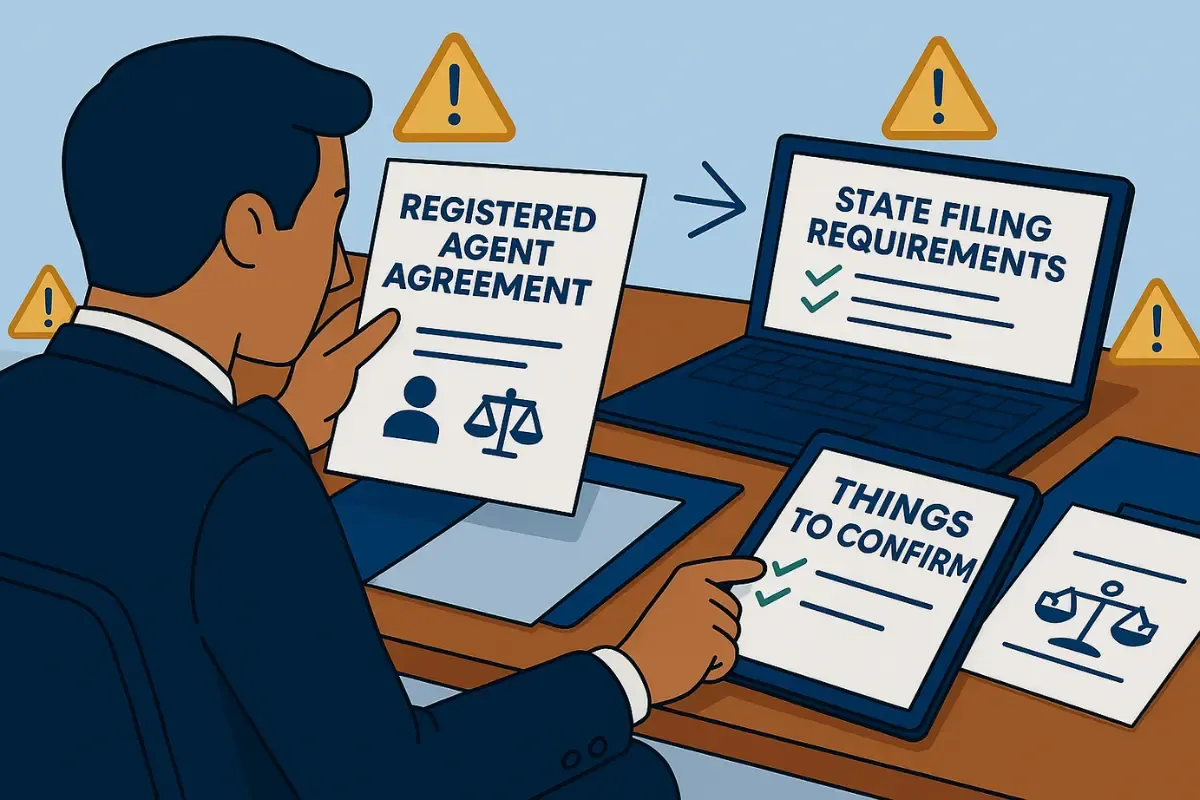
Before switching registered agents, carefully review your current service agreement for cancellation policies, renewal timelines and any transfer restrictions. Pay attention to required notice periods, potential cancellation fees and necessary documentation to terminate the contract properly. Strict cancellation windows or hidden fees are common reasons many businesses eventually look for more transparent services. When in doubt, contact your current provider early to clarify terms and prepare for a smooth switch.
Ensure No Pending Compliance Issues
Before changing your registered agent, confirm that your business is in good standing with all relevant jurisdictions. Outstanding filings, unpaid fees or unresolved legal matters can cause states to reject your registered agent change request or impose penalties. Many states require a business to have no compliance issues before accepting amendments to corporate records, making it essential to resolve these matters in advance.
Prepare Information on the New Provider
Gather key details about your prospective registered agent, including their legal name, physical address, signed consent to serve and any required authorization forms. Verify that the provider meets your state's qualifications, such as maintaining a physical presence and being available during normal business hours. Top-tier providers often supply pre-filled consent and authorization documents to simplify the onboarding process.
Know Your State's Legal Requirements
The process for changing your registered agent varies by state but typically involves submitting the necessary forms to the Secretary of State. Some jurisdictions accept online filings, while others require paper submissions. Filing fees range widely, and documentation requirements, including signed consent from the new agent, differ from state to state. Reputable registered agent providers stay current on all 50 states' rules to help ensure your filings are accepted without issues.
Step-by-Step Process to Switch Registered Agent Providers
The following steps help business owners transition their registered agent smoothly while maintaining full legal compliance. Although the process is generally consistent across states, be sure to verify your jurisdiction's specific rules to avoid unexpected issues.
Step 1 – Choose a New Registered Agent Provider
Research potential registered agent providers thoroughly, focusing on compliance support, responsiveness, pricing and national coverage. Many providers specialize in multi-state compliance and offer setup assistance to minimize paperwork and streamline the transition process.
Step 2 – Notify the Current Provider (if needed)
Review your existing service agreement for any notice requirements and cancellation policies. Even if not legally required, providing clear notice helps maintain professional relationships and ensures proper documentation for a smooth transition.
Step 3 – File a Change of Registered Agent Form with the State
Obtain the correct change of registered agent form, often called 'Statement of Change of Registered Agent', from your Secretary of State's website. Most states require specific details, including the new registered agent's consent, business address and authorized signatures. Many jurisdictions now offer online filing with guidance through state-specific steps for faster processing.
Step 4 – Pay the Required State Filing Fee
Most states charge a filing fee to process your registered agent change, with amounts varying by jurisdiction. Confirm the exact fee and acceptable payment methods on your state's official website to avoid delays or rejected filings.
Step 5 – Confirm the Change Has Been Accepted
Track the status of your filing and verify approval through official state confirmation, which serves as public record. Reputable providers often offer automatic confirmation alerts and digital storage of these documents for easy access.
Step 6 – Notify Your Team and Update Records
Inform stakeholders about the change and update your compliance calendars with the new registered agent's address and contact information. Review and revise business documents, contracts and filings that reference your previous registered agent address to ensure accuracy.
State-Specific Rules for Changing Registered Agents
Registered agent requirements vary widely across different states, each with its own processes, fees, forms and timelines. To file paperwork correctly and ensure proper processing, businesses must follow their specific state's requirements exactly.
You can find detailed summaries of these specific state requirements through your Secretary of State website or similar official resources. Professional registered agent providers stay current with these varying rules across all 50 states, helping businesses, especially those operating as foreign entities, navigate differences smoothly and efficiently.

Tips for Choosing the Right Registered Agent Provider
Selecting a registered agent that provides reliable service is essential to ensure the timely receipt and handling of important documents. Evaluating providers carefully can improve compliance, reduce legal risk and enhance your business's operational efficiency.
Look for Compliance Monitoring & Alerts
Choose a registered agent provider that offers automated alerts for filing deadlines, annual reports and legal notices. These timely reminders help businesses maintain good standing and avoid penalties that can result from missed deadlines or undelivered government correspondence. Top-tier providers often include filing support services to further reduce the risk of late fees, compliance problems and administrative dissolution.
Evaluate Customer Support & Accessibility
Before you hire a registered agent, evaluate the quality of their customer support, including availability by phone and email, response time and overall helpfulness. Responsive and knowledgeable support is essential when handling time-sensitive legal documents or urgent compliance matters. The best providers employ U.S.-based compliance experts accessible during regular business hours to guide you through any questions or issues.
Transparent Pricing and Bundled Services
Consider the benefits of bundled services such as annual report filing and business formation assistance. Multi-year and multi-state discounted plans can also help reduce overall costs. Clear, transparent pricing without hidden fees enables businesses to plan and budget effectively for ongoing compliance requirements.
National vs. Local Service Providers
Weigh the advantages of national versus local registered agents based on your business's needs. National firms provide consistent service across multiple states and often have broad experience with various jurisdictions. In contrast, local providers may offer more personalized attention and familiarity with state-specific regulations. Many established registered agent companies combine national reach with dedicated local support, providing scalability and reliable service as your business grows.
FAQs
Disclaimer
This content is intended for general educational and informational purposes only and does not constitute legal, tax, or accounting advice. Every effort is made to keep the information current and accurate; however, laws, regulations, and guidance can change, and no representation or warranty is given that the content is complete, up to date, or suitable for any particular situation. You should not rely on this material as a substitute for advice from a qualified professional who can consider your specific facts and objectives before you make decisions or take action.
Stay Informed!
Sign up to receive important updates, helpful resources, and special offers.