


What if your business received a Certificate of Good Standing from the state this morning, only to be hit with a federal tax penalty this afternoon? This scenario is not just possible; it's a common pitfall for business owners who confuse these two critical concepts. Good standing vs compliance is not a matter of semantics—it is the fundamental difference between a state's official stamp of approval and the continuous, complex work of meeting all legal obligations.
While your business' good standing status confirms you've met baseline state requirements, compliance is the ongoing, active process of adhering to a web of federal, state, and local laws. Understanding this distinction is not academic; it is essential for protecting your company's legal rights, financial health, and operational freedom. This guide will demystify both terms, outline the severe consequences of neglecting either, and provide a clear roadmap for maintaining both to ensure your business remains protected and poised for growth.
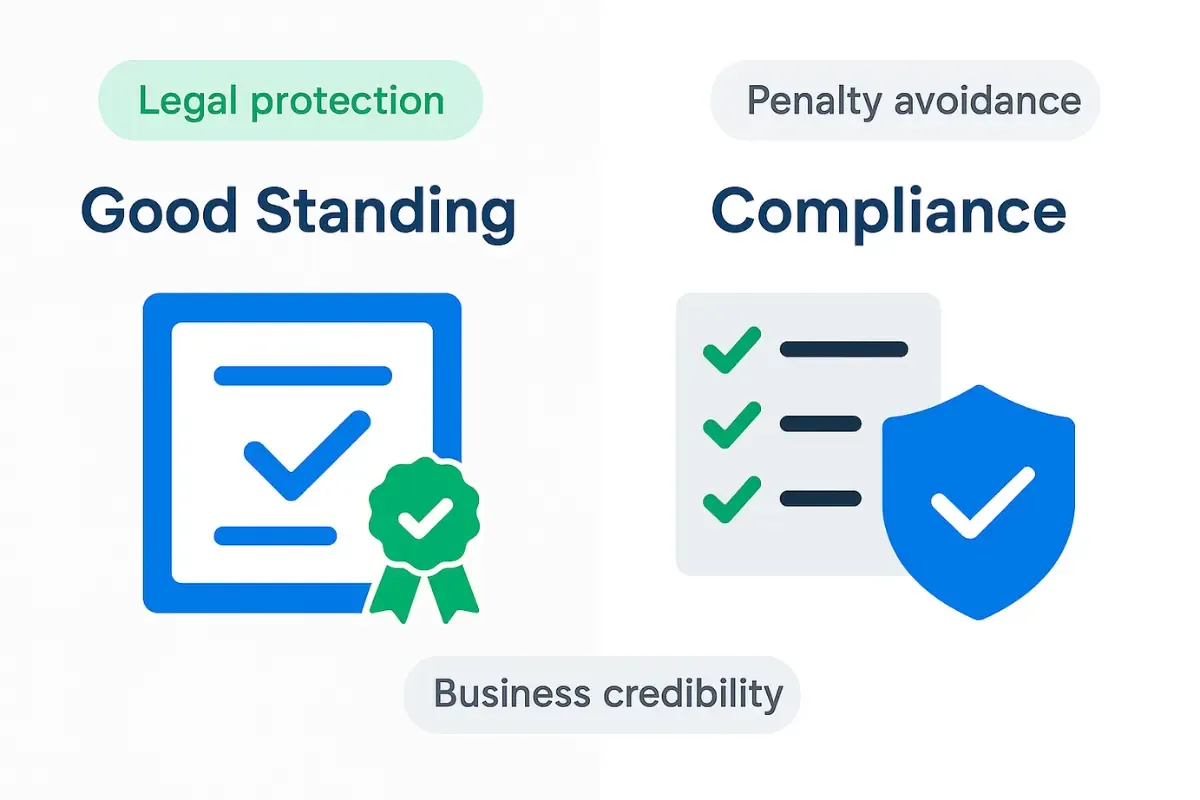
Key Takeaways
Understanding the relationship between compliance and good standing protects your business from preventable consequences that could derail your operations.
Good standing and compliance work together but aren't interchangeable: Good standing reflects your status with the state based on completed filings and payments. Compliance encompasses the broader range of legal obligations your business must meet. You need both to operate legally and protect your business structure.
Loss of good standing triggers immediate consequences: When your business falls out of good standing, you face penalties that compound quickly—fines accumulate daily, your ability to conduct business legally stops, and the liability protection your business structure provides can disappear entirely.
Prevention costs far less than correction: Missing a single annual report might seem minor, but the cascading effects—reinstatement fees, accumulated penalties, potential legal complications, and interrupted business operations—can cost thousands more than proactive compliance would have required.
Different states have different requirements: Each state sets its own rules for annual reports, fees, deadlines, and reinstatement procedures. Operating in multiple states multiplies these obligations, making systematic tracking essential rather than optional.
Professional support provides protection: The complexity of maintaining compliance across multiple jurisdictions, tracking varying deadlines, and ensuring proper documentation makes expert assistance a practical investment rather than an unnecessary expense.
What Does “Good Standing” Mean?
Good standing is an official status conferred by your state's Secretary of State. It is a formal recognition that your business entity—whether a corporation or one of many limited liability companies—has met its core statutory obligations to that specific state. Think of it as your business's "active and valid" status with its primary regulatory body.
A business achieves and works to maintain good standing status by fulfilling specific, state-mandated duties. These typically include filing annual reports on time, paying all required franchise taxes and state fees, and maintaining a registered agent. When you request a Certificate of Good Standing (also known in some states as a Certificate of Existence), the state is verifying that your entity's record is clear of these specific delinquencies at that moment in time.
As the Tennessee Secretary of State explains, this status indicates that a business "has filed all required documents and paid all necessary fees" to the state. This certification is often required for critical business activities like securing a loan, entering into major contracts, or expanding your operations into new states through foreign qualification.
What Does “Compliance” Mean?
If good standing is a specific status, then compliance is the entire universe of actions required to achieve and maintain it, plus many more. Compliance refers to the comprehensive and continuous process of adhering to all applicable state laws, federal regulations, and local ordinances that govern your business operations.
This scope is vast and extends far beyond the requirements for a Certificate of Good Standing. Your business compliance requirements include, but are not limited to:
Federal Tax Filings: Submitting annual returns, payroll taxes, and other required forms to the IRS.
State and Local Taxes: Remitting sales tax, income tax, and other locally mandated levies.
Industry-Specific Regulations: Adhering to rules from bodies like the FDA for food products or FINRA for financial services.
Employment Laws: Following federal and state guidelines for wages, workplace safety (OSHA), and anti-discrimination.
Data Privacy Laws: Complying with regulations like the CCPA in California or GDPR for European customers.
Local Business Licenses and Permits: Maintaining operational licenses required by your city or county.
As the Alaska Department of Commerce clarifies, a "Certificate of Compliance" is a separate document that may be required to confirm a business has met specific regulatory benchmarks, which are distinct from the criteria for good standing. This highlights that compliance is a multi-layered endeavor.
Key Differences Between Good Standing and Compliance
Understanding the distinction between these concepts is crucial for effective entity compliance management. The following table outlines the core differences:
Feature | Good Standing | Compliance |
|---|---|---|
Nature | A status granted by the state of formation. | A continuous process of adhering to laws. |
Scope | Narrow; focuses on state-level corporate formalities. | Broad; includes federal, state, and local laws. |
Verification | Proved by a Certificate of Good Standing. | Requires ongoing monitoring and audits; no single certificate proves full compliance. |
Governing Bodies | Primarily, the state's Secretary of State. | Multiple (IRS, DOL, OSHA, state tax agencies, local governments). |
Primary Purpose | To maintain the legal rights and existence of the entity within a state. | To operate legally, avoid penalties, and manage risk across all activities. |
Good Standing as a Status
Good standing is a binary condition—you are either in good standing or you are not. It is a snapshot of your relationship with your formation state based on a narrow set of filing and fee requirements. Losing this status can lead directly to the administrative dissolution of your company, stripping you of your limited liability protection.
Compliance as Ongoing Actions
Compliance is never finished. It is the day-to-day, year-round effort of meeting deadlines, filing reports, and adapting to regulatory changes. This demands a clear understanding of the distinction between state compliance vs federal compliance, as the requirements and enforcement agencies differ significantly. For business owners, this complexity makes business compliance automation an invaluable tool for efficiently managing the myriad of obligations across multiple jurisdictions.
How They Work Together
Your compliance actions are the engine that powers your good standing status. Filing your annual reports and paying franchise taxes are compliance tasks that directly support your good standing. However, you can be fully compliant with your state's corporate filing requirements (and thus in good standing) while simultaneously being non-compliant with federal tax laws or local licensing rules. This is why a Certificate of Good Standing should never be mistaken for a comprehensive compliance health check. The relationship between business compliance and good standing is a foundational concept for long-term corporate health.
Why Good Standing Alone Isn’t Enough
Relying solely on your good standing status is a dangerous miscalculation. This certificate does not verify your federal tax status, your compliance with employment laws, or your possession of required local permits. A business can be in good standing with its state while facing an IRS audit for unpaid payroll taxes or a lawsuit for violating wage-and-hour laws.
The risks of this over-reliance are significant. You may face substantial federal penalties, lose crucial business licenses, or become liable in employment-related lawsuits. Your good standing offers no protection against these compliance failures. A holistic approach that manages both state formalities and broader regulatory duties is the only way to fully protect your business.
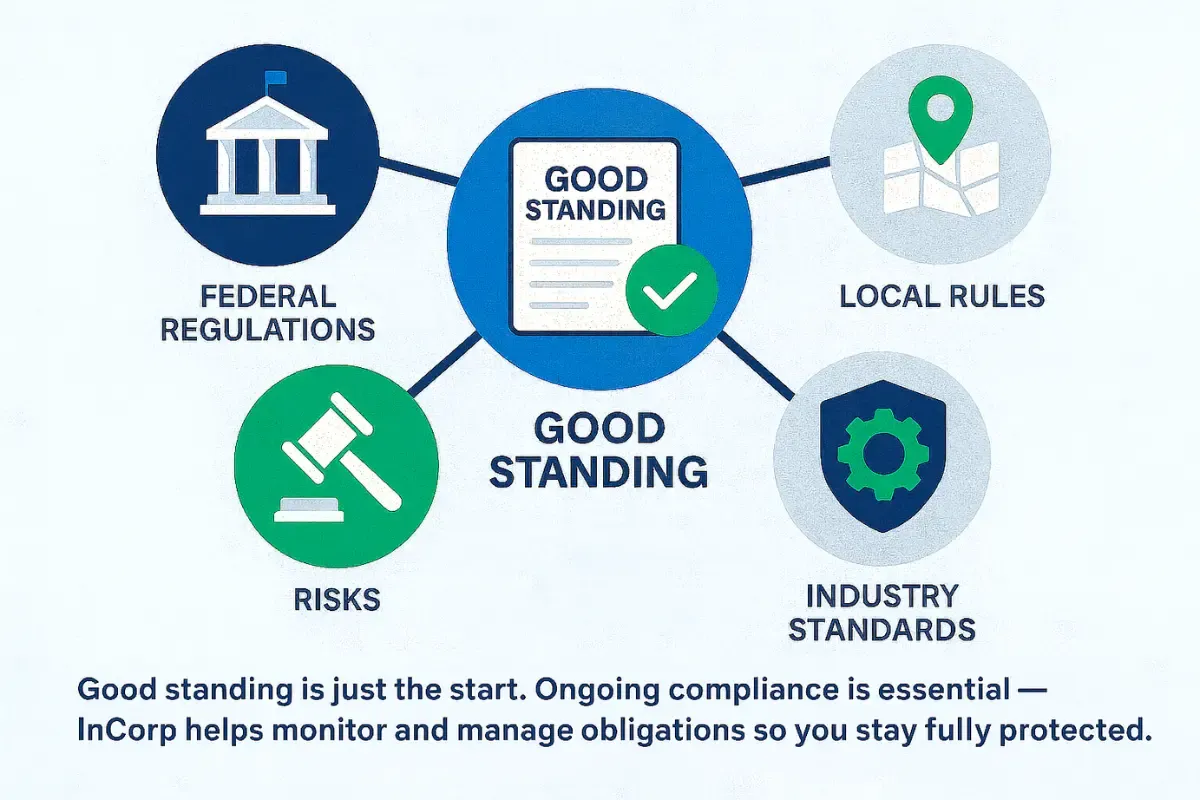
Consequences of Falling Out of Good Standing or Compliance
The repercussions for failing to maintain either your good standing or your broader compliance obligations are severe and can escalate quickly, threatening the very survival of your business.
Legal and Financial Penalties
Falling out of good standing triggers immediate state penalties, including late fees, interest on unpaid taxes, and the inability to enforce contracts in court legally. For compliance failures, penalties are often more severe: the IRS can impose hefty fines and tax liens, while regulatory agencies can issue massive fines for violations of industry-specific rules. In both cases, the financial drain can be crippling.
Loss of Business Credibility
Your reputation is a fragile asset. A lapse in good standing becomes a matter of public record, potentially causing partners, lenders, and investors to question your operational competence. A compliance failure, such as a tax lien or labor violation, can cause irreparable damage to your brand and make it impossible to secure financing or attract top talent.
Operational Setbacks
The most direct consequence of losing good standing is the state's power to dissolve your company, ending its legal existence administratively. For compliance issues, the fallout can include the revocation of essential business licenses, debarment from government contracts, or a state-mandated suspension of your operations until the violations are corrected.
How InCorp Can Help Prevent These Issues
The complexity of managing these intersecting requirements is why many businesses seek professional support. InCorp's services are designed to act as your first line of defense. Our reliable registered agent services help ensure you never miss a critical legal notice from the state, while our compliance monitoring tools help track deadlines for annual reports and other key filings. This proactive support system helps business owners avoid the costly mistakes that lead to these severe consequences.
How to Maintain Both Good Standing and Compliance
A proactive, organized approach is non-negotiable for managing the dual demands of good standing and compliance. Here are the essential practices for maintaining both.
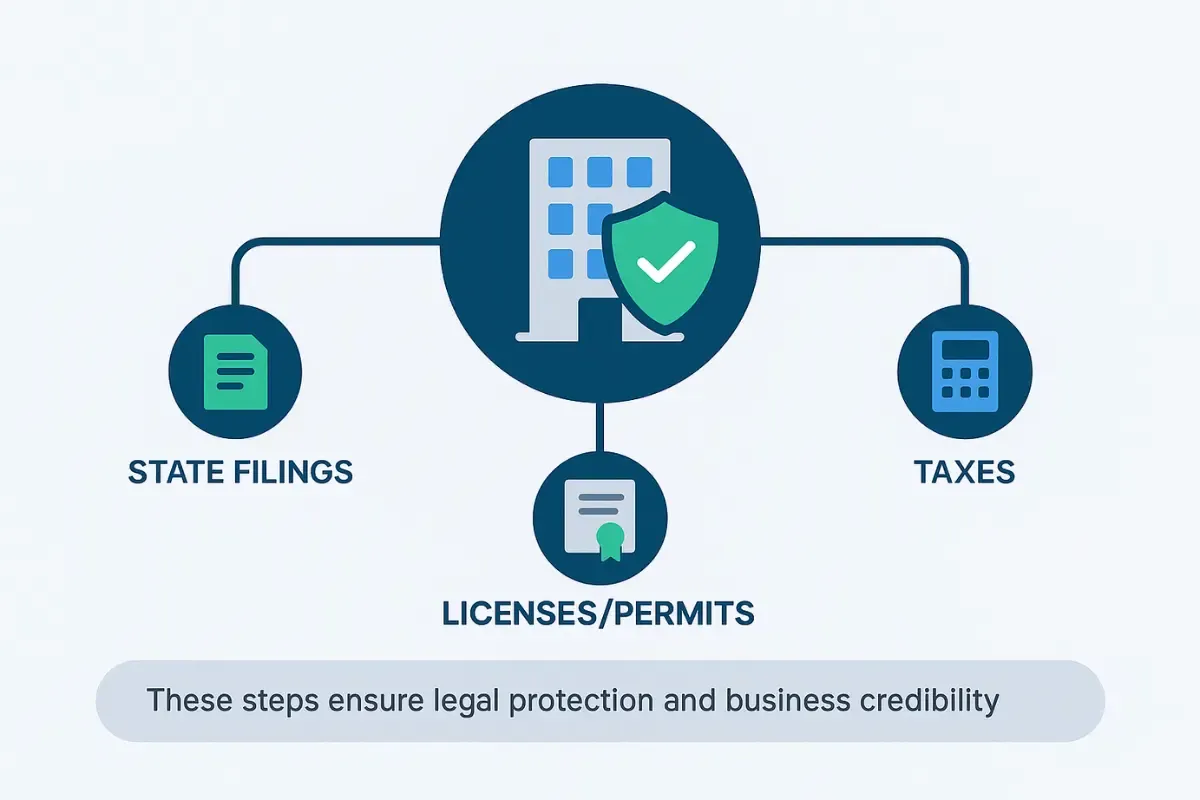
Annual Reports and Franchise Taxes
Timely filing of annual reports and payment of franchise taxes is the most direct way to maintain your good standing. These are non-negotiable state requirements. Setting up a master compliance calendar with reminders for these deadlines is crucial. Utilizing corporate compliance software or the best compliance tools can automate these reminders and provide a centralized dashboard for all your state-specific deadlines.
Business License Renewals
Compliance requires tracking all local, state, and industry-specific licenses and ensuring they are renewed before their expiration dates. Letting a single license lapse can result in fines or an order to cease operations. Maintain a separate log of all licenses and their renewal dates, and review it quarterly. Business licensing can be complex and time-consuming, but specialized licensing services and software platforms can help you navigate the renewal process, track expiration dates, and automate renewal reminders to prevent costly lapses.
Employment Law Compliance
This is a complex area where many businesses falter. Stay current with federal and state minimum wage laws, overtime rules, workplace safety standards, and required employee postings. Regular audits of your HR practices can identify potential vulnerabilities before they become costly violations.
IRS & Tax Filings
Meeting all federal and state tax obligations is a cornerstone of compliance. This includes income tax, payroll tax, and sales tax. Work with a qualified accountant and implement a system to track all tax deadlines throughout the year. Falling behind on taxes can lead to the most aggressive collection actions your business will ever face.
Registered Agent and Service of Process Obligations
Appointing and maintaining a reliable registered agent is a legal requirement for maintaining good standing in every state. Your registered agent is your official point of contact for service of process and state correspondence. If the state cannot contact your agent, it can lead to a default judgment against your business or loss of good standing. InCorp's registered agent services provide a dependable, professional solution to meet this critical requirement.
Common Mistakes to Avoid
Even with the best intentions, business owners often make preventable errors that jeopardize their standing and compliance.
Assuming Good Standing Equals Full Compliance: This is the most fundamental and costly mistake. Always treat your Certificate of Good Standing as one component of your compliance profile, not the entire picture.
Using an Unreliable Registered Agent: Failing to maintain a registered agent with a physical in-state address can lead to missed lawsuits and state notices, resulting in default judgments and loss of good standing.
Misunderstanding State-Specific Requirements: State filing requirements vary significantly. Assuming the rules from your home state apply elsewhere is a recipe for non-compliance when expanding operations.
Poor Recordkeeping: Disorganized records lead to missed deadlines, inaccurate filings, and a frantic scramble during audits. Implementing a consistent entity compliance management system is essential.
FAQs
Disclaimer
This content is intended for general educational and informational purposes only and does not constitute legal, tax, or accounting advice. Every effort is made to keep the information current and accurate; however, laws, regulations, and guidance can change, and no representation or warranty is given that the content is complete, up to date, or suitable for any particular situation. You should not rely on this material as a substitute for advice from a qualified professional who can consider your specific facts and objectives before you make decisions or take action.
Stay Informed!
Sign up to receive important updates, helpful resources, and special offers.