


What if a single regulatory misstep, overlooked by a team wearing too many hats, triggered a fine that wiped out your entire quarterly profit? For small businesses, this isn't a distant fear; it's an everyday reality. While large corporations have whole departments dedicated to navigating legal intricacies, small companies often operate without a designated compliance officer, leaving them exposed. In an era of increasing regulation, understanding compliance responsibilities for small businesses is a fundamental requirement for sustainable growth. Implementing a basic compliance program for small businesses is a crucial step in mitigating regulatory risks and ensuring responsible business practices.
The good news? This doesn't require a massive budget. This guide explains the crucial role of a compliance officer in a small business, illustrating how this function mitigates risk and establishes a framework for sustained success.
Key Takeaways
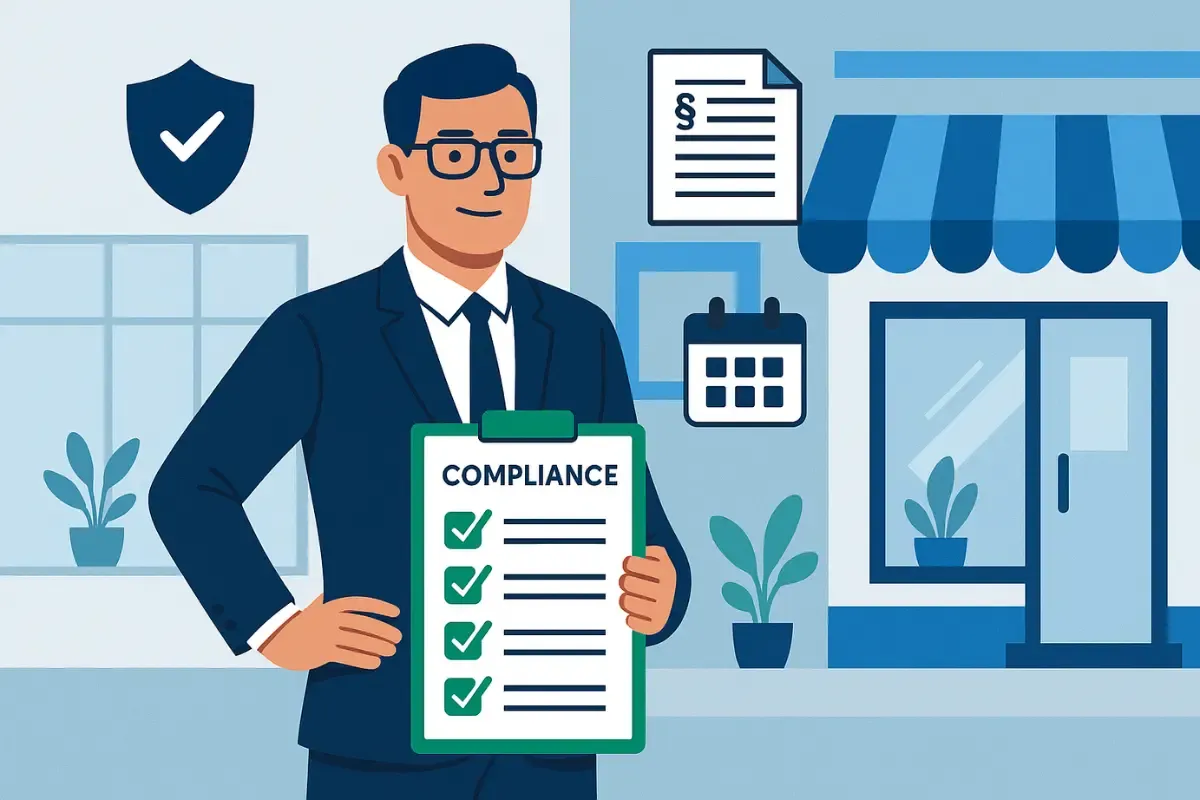
Compliance is proactive, not reactive: A compliance officer focuses on preventing issues through monitoring and risk assessments, not just reacting to problems.
It's a strategic role, not an administrative one: Beyond checking boxes, a compliance officer protects the business's reputation, reduces legal liabilities, and supports scalable growth.
Structure creates efficiency: Clear policies and internal controls streamline business operations, reduce errors, and ensure consistency.
The role can be adapted to suit various needs: for small businesses, it can be a part-time internal role, a blended role, or outsourced to experts.
Culture is key: A compliance officer fosters a culture of integrity, making compliance a shared responsibility across the entire team.
Why Small Businesses Particularly Need a Compliance Officer
Many small business owners operate under the assumption that regulations are a "big company problem." This is a dangerous misconception. The growing complexity of local, state, and industry-specific regulations means that even the smallest businesses face significant regulatory risks. A designated compliance officer provides the structure and accountability necessary to navigate this complex landscape, transforming compliance from a vague concern into a well-managed process. A practical first step is to conduct regular, independent compliance audits with clear remediation and escalation procedures, as recommended in a comprehensive guide on compliance audits published on Medium’s Gart Solutions.
Navigating Increasing Regulatory Complexity
From data privacy to industry-specific permits, the regulatory web is vast. A compliance officer interprets these rules and ensures the business adapts, preventing costly oversights. A foundational step in this compliance process often involves maintaining good standing with state authorities, a key aspect of business administration.
Reducing Legal Liabilities
Ignorance is never a valid legal defense. Proactive compliance responsibilities minimize exposure to fines and lawsuits. By conducting regular risk assessments, a compliance officer identifies vulnerabilities and addresses them before they become expensive legal problems, a core part of risk management.
Maintaining Reputation and Trust
A single compliance failure can shatter the hard-earned trust of your customers, partners, and vendors. A compliance officer helps uphold ethical operations in a small business, safeguarding the company's most valuable asset.
Ensuring Operational Consistency
Without clear guidelines, operational inconsistencies arise, resulting in errors, confusion, and inefficiency. A compliance officer helps implement structured procedures that keep teams aligned, reducing errors and supporting smooth business operations.
Fostering Accountability and Clarity
When everyone is responsible for compliance, no one is truly accountable. Assigning a clear owner for compliance responsibilities eliminates dangerous ambiguity.
Core Functions in a Small-Business Setting
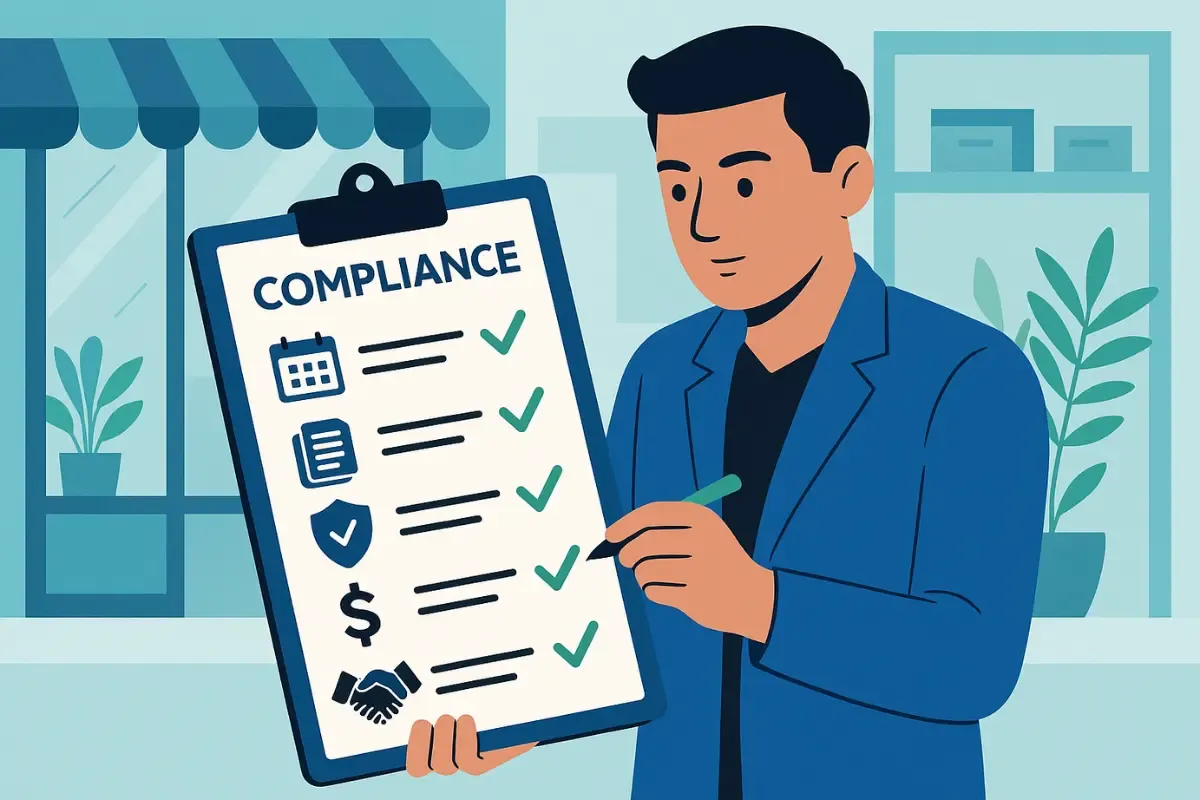
The role of a small business compliance officer is multifaceted, focusing on practical, impactful actions tailored to limited resources. This is achieved through a formalized corporate compliance program—a framework of internal policies, internal controls, and procedures for maintaining proper corporate records—which the officer develops and oversees to ensure the business meets all its legal obligations.
Designing Necessary Policies & Internal Controls
This involves crafting clear policies—like a code of conduct or safety manual—that are proportionate to the business's size. These documents establish expectations and implement internal controls that prevent missteps.
Monitoring Compliance & Early Risk Detection
A compliance officer actively enforces rules by reviewing business operations and staying ahead of regulatory changes. This proactive approach is the core of effective risk management.
Training & Communicating with Staff
Policies are useless if no one understands them. A critical function is educating employees through simple, practical compliance training and ongoing communication.
Responding to Issues or Breaches
When a mistake happens, a structured response is crucial. The officer manages the incident and implements corrective steps—a task that requires strong problem-solving skills.
How a Compliance Officer Adds Value in Small Settings
For small businesses, a compliance officer isn't a cost center but a strategic partner in building resilience and reputation—an idea echoed in a Forbes Technology Council article on creating a culture of compliance.

Minimizing Regulatory and Legal Risks
By systematically identifying applicable laws, the officer directly protects the bottom line by avoiding fines and penalties.
Protecting Business Reputation
In the age of social media and online reviews, a compliance misstep can go viral. The officer safeguards the company's public image by ensuring ethical operations in a small business.
Streamlining Policies and Procedures
Well-designed policies eliminate guesswork and reduce operational errors. This creates efficiency, saves time, and allows the team to focus on growth rather than fixing preventable mistakes.
Promoting Ethical Culture
Perhaps most importantly, a compliance officer helps embed integrity into the company's DNA. They set the tone from the top, encouraging ethical behavior and making it clear that cutting corners is not tolerated. As highlighted by business leaders, creating this culture is a fundamental driver of long-term success.
Supporting Sustainable Growth
A robust compliance framework is a prerequisite for scaling. Whether seeking investment, forming new partnerships, or undergoing an audit, having your compliance in order makes the business more attractive and prepared for growth opportunities.
Adaptations for Small Businesses
Small businesses don't need a full-time executive. The function of a compliance officer can be scaled through:
Blended Role: Assign compliance duties to a trusted manager (e.g., Operations Manager, HR lead) with a keen eye for detail.
Part-Time Focus: Designate a set number of hours per week for an employee to focus solely on compliance monitoring and tasks.
Leverage Technology: Use affordable compliance tools and software to automate monitoring, policy distribution, and training tracking.
Outsourcing Compliance for Small Businesses: Hire an external consultant for specific tasks, such as annual risk assessments, while an internal point person handles day-to-day oversight.
Conclusion: Building a Compliant Foundation
Appointing a point person for compliance responsibilities is a strategic decision that reduces risk and builds operational excellence. Whether assigned internally or through outsourcing, compliance for small businesses can be transformed from a source of anxiety into an organizational strength through accountability.
Navigating small business regulatory requirements is essential to operating successfully. InCorp helps you stay compliant by managing foundational tasks such as filing annual reports and maintaining a dependable registered agent, providing expert support and practical tools every step of the way.
FAQs
Disclaimer
This content is intended for general educational and informational purposes only and does not constitute legal, tax, or accounting advice. Every effort is made to keep the information current and accurate; however, laws, regulations, and guidance can change, and no representation or warranty is given that the content is complete, up to date, or suitable for any particular situation. You should not rely on this material as a substitute for advice from a qualified professional who can consider your specific facts and objectives before you make decisions or take action.
Stay Informed!
Sign up to receive important updates, helpful resources, and special offers.