


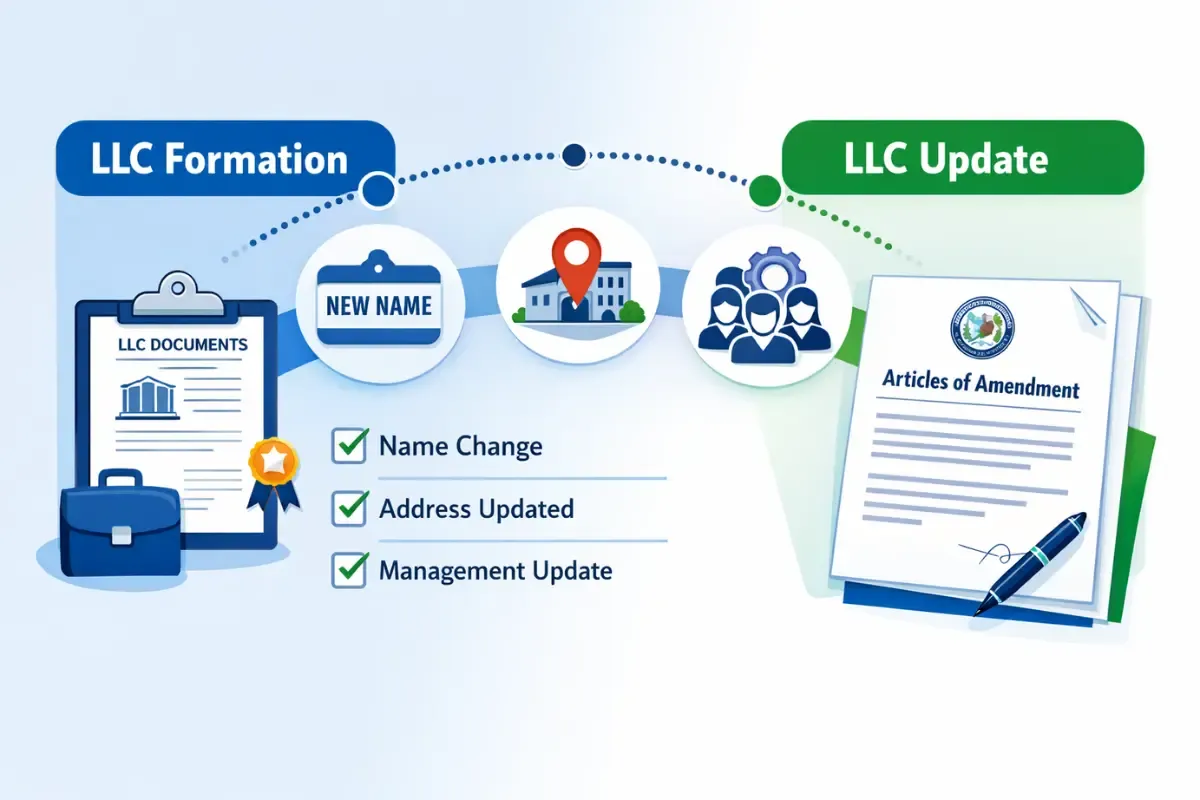
When you first filed your LLC formation documents, your business had a specific name, address, and structure. But businesses evolve. A rebrand might require a new legal name. Growth might trigger relocation. Strategic shifts could change management. These changes typically create a legal obligation to update your state's official records.
Articles of Amendment serve as the formal mechanism for notifying the state when core business details change. The original Articles of Organization are not static documents. When fundamental information shifts, state law requires official notification to ensure the public record remains accurate. While the filing process follows standard procedures, attention to detail helps avoid administrative rejection and keeps your LLC in good standing.
InCorp is not a law firm and does not provide legal or financial advice. Readers should consult with qualified professionals for their specific situations.
Key Takeaways
Know when an amendment is required: File Articles of Amendment when changing your LLC’s legal name, principal business address, management structure, or specific purpose so that the formation documents match reality and your entity remains compliant. Some updates, like registered agent changes or certain address changes, may use separate state forms or annual reports instead of a general amendment filing.
Treat internal and state records as separate: Updating the operating agreement alone does not change the public record; ownership, management, or structural changes often require both an internal resolution and a state-filed amendment. Courts, lenders, and agencies rely primarily on state records, so internal documents and filed amendments must stay aligned.
Follow a structured approval and filing process: Secure member or manager approval under your operating agreement, document it in written resolutions, then complete the state’s Articles of Amendment form using the exact current legal name, file number, and precise new text. Submit through the state’s approved channel (online, mail, or in person), pay the non‑refundable fee, and keep the state-stamped Certificate or confirmation in your permanent records.
Avoid preventable errors that cause rejections: Confirm proposed new names are distinguishable in the Secretary of State database before filing, and verify all required fields, signatures, and fees are correct. Common mistakes include name conflicts, missing file numbers, incomplete addresses, and assuming a DBA or internal operating agreement update replaces the need for an Articles of Amendment filing.
Plan for timing, multi-state obligations, and follow-on updates: Many states allow delayed effective dates and expedited processing, but processing times and publication requirements (in states like New York, Arizona, and Nebraska) vary. If you are foreign qualified, you usually must amend in your home state first, then update every foreign state, and finally refresh related records such as IRS name records, bank accounts, licenses, and BOI or local business filings.
When to File Articles of Amendment
Understanding when to file Articles of Amendment helps business owners stay compliant and avoid penalties. Different types of changes trigger different filing requirements, and some modifications require specialized forms rather than standard amendment forms.
Business formation guidance published by state filing authorities establishes that certain changes to an LLC's structure or core information require immediate filing with the state to maintain good standing and legal compliance.
Changing the Legal Name of the LLC
How to amend LLC Articles of Organization often begins with a complete legal name change, representing the most common filing reason. This differs from registering a "Doing Business As" (DBA) name, which allows marketing under an alternate name while maintaining the original legal identity. The process to change an LLC name with the state requires verifying the new name complies with state naming requirements, including being distinguishable from existing entities and typically including "LLC" or "Limited Liability Company" within the name. Before filing, verify name availability through the Secretary of State database.
The IRS requires notification when a business changes its legal name, though typically a new Employer Identification Number is not required unless the entity structure fundamentally changes.
Updating the Principal Business Address
States require current physical addresses, including the principal address, for registered LLCs to ensure the business can receive official correspondence. While some states allow address updates through Annual Report filings, moves occurring outside the annual filing window often require immediate amendment. The principal address represents the primary location where business operations occur. Changes must be reported promptly to maintain accurate business records.
Altering the Management Structure
LLCs can operate under different management frameworks. The most common change involves converting from member-managed (all owners participate in daily decisions) to manager-managed (appointed managers handle operations) or vice versa. This structural change fundamentally alters governance and who has the authority to enter into contracts. Because these changes affect legal liability and operational authority, states require formal amendment. The operating agreement typically governs the approval process.
Modifying the Business Purpose
Original Articles of Organization often include a statement of business purpose describing the company's intended activities. When an LLC significantly expands or shifts its operations, the stated purpose may no longer accurately reflect actual business activities.
While many states accept general-purpose statements like "any lawful business," LLCs with specific purpose clauses may need to file amendments when expanding into substantially different business areas. This helps ensure the public record accurately represents what the company does.
Updates That May Require Different Forms
Not all business changes are reflected in the Articles of Amendment. The LLC registered agent change process often requires a dedicated "Statement of Change of Registered Agent" form. Similarly, adding or removing members might be accomplished through internal operating agreement updates rather than state filings, depending on state requirements. Address changes sometimes qualify for simplified reporting through annual filings. Businesses should verify their state-specific requirements to ensure they file the appropriate documentation.
The Filing Process
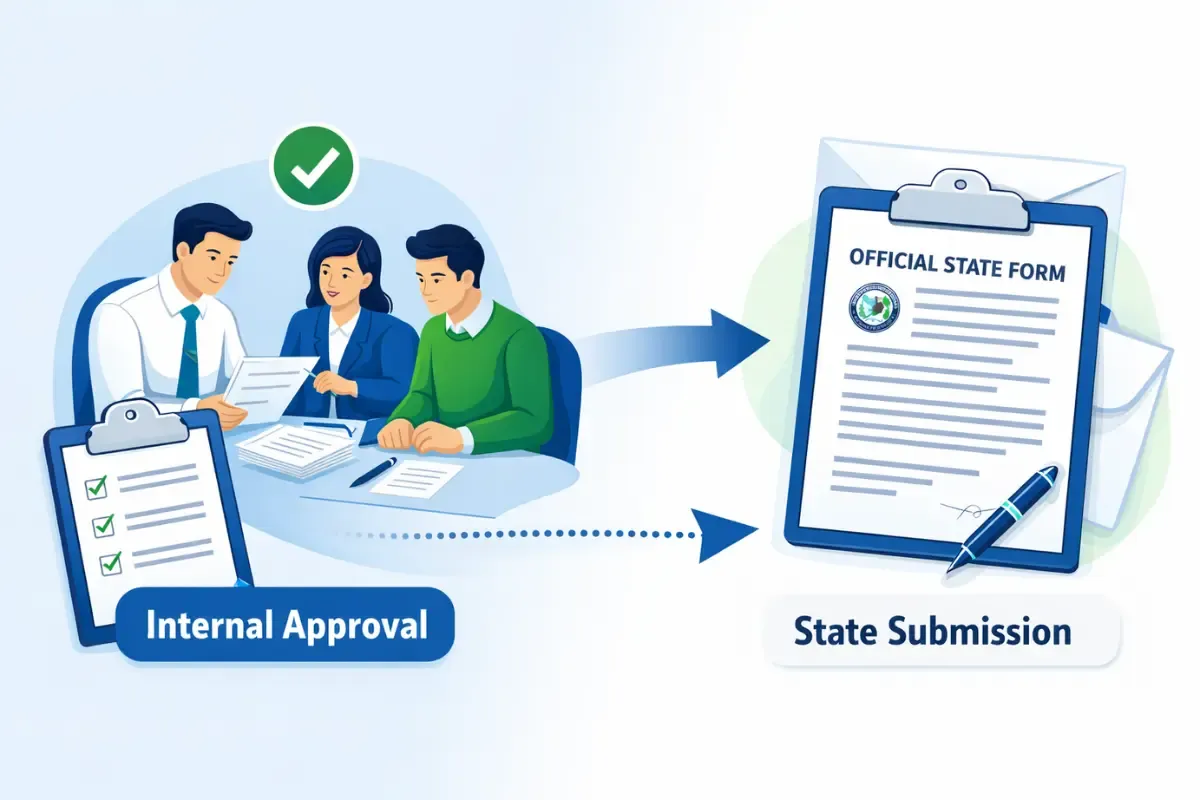
Filing Articles of Amendment follows a structured process that begins with internal approvals and concludes with official state confirmation.
Internal Approval and Documentation
Before submitting anything to the state, LLC members typically must approve changes through formal internal processes. The operating agreement usually governs these approval procedures, specifying voting requirements and decision-making authority. Members should document internal approval through written resolutions. These resolutions become part of the LLC's business records and demonstrate that changes were authorized correctly. The state filing is the external step, but internal authorization legally authorizes it.
Some operating agreements require supermajority votes or unanimous consent for certain modifications, particularly in manager-managed structures involving the Board of Directors.
Completing the State Form
Articles of Amendment forms vary by state, but generally require similar information. Filers typically must reference the original Articles of Organization, identify the section being amended, and provide the exact new text. Amendment forms typically require the LLC's exact legal name as currently registered, the state file number, the date of original organization, and the specific article number and text being changed. Accuracy matters significantly, as discrepancies can trigger rejection.
Some states provide fillable PDFs while others offer online filing through Secretary of State portals. States may provide expedited processing for an additional fee when time is critical to business operations.
Paying the Filing Fee
The filing fee for Articles of Amendment is mandatory and generally non-refundable, regardless of whether the state approves or rejects the submission. Fees vary significantly by state, ranging from $10 to over $100, depending on the jurisdiction and the type of amendment being filed.
Payment methods depend on the filing channel. Online filing submissions typically accept credit cards or electronic payments through secure portals. Mail submissions require checks or money orders made payable to the Secretary of State or equivalent state agency. Some states assess additional fees for in-person submissions or expedited service.
Verification and Proof
Once the state agency processes the amendment, it issues confirmation documentation, often referred to as a Certificate of Amendment LLC. This document serves as official proof that the state recognized and approved the change and should be retained in permanent business records.
Some states email confirmation for online filing submissions, while others mail physical certificates. Processing times vary from immediate approval for online submissions to several weeks for mail submissions. After receiving confirmation, businesses should update all related records, including bank accounts, business licenses, and tax registrations. The Certificate of Amendment LLC may be required to prove the legal change to financial institutions.
Common Filing Errors
Understanding frequent mistakes helps businesses avoid delays, rejections, and additional filing fees.
Name Availability Issues
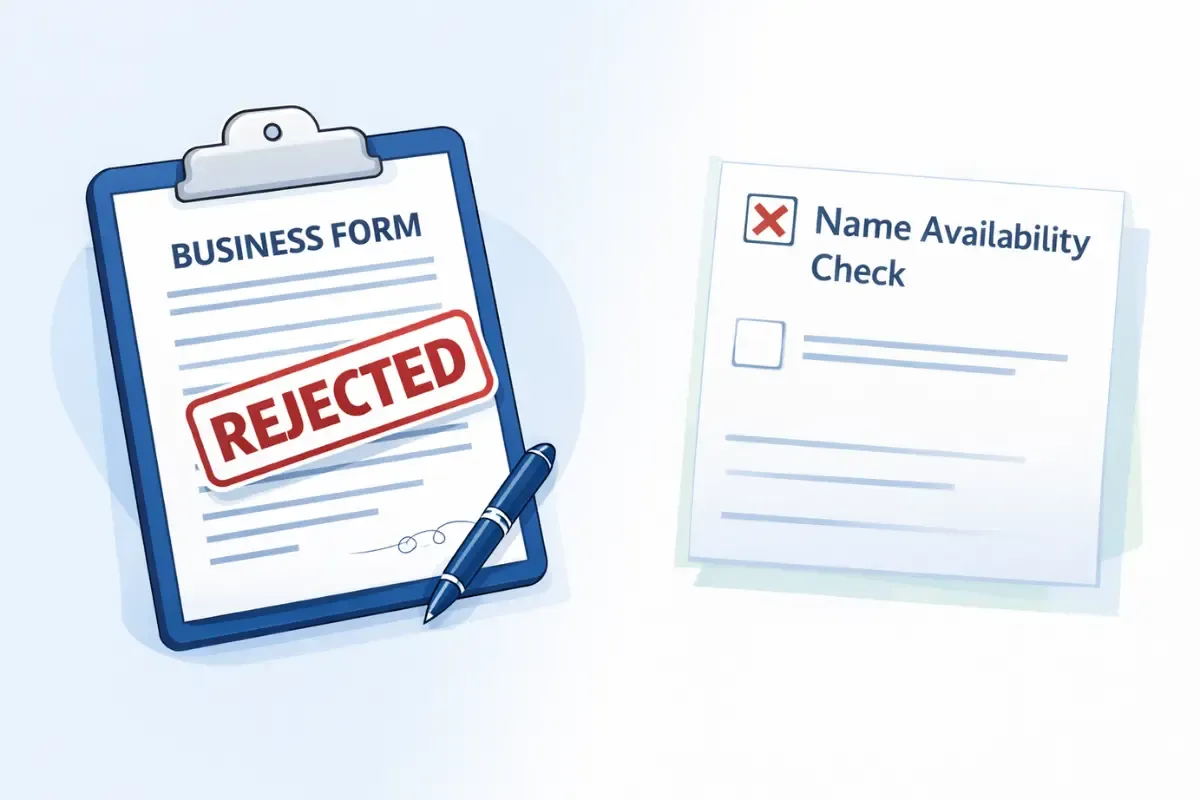
When changing a business name through the process to change an LLC name with the state, the proposed new name must be distinguishable from all other entities already registered. Many amendment filings are rejected because the desired name is too similar to an existing registration. Before filing, conduct thorough name searches using the Secretary of State's business entity database. Some states offer name reservation services that allow you to secure a name before submitting formal amendment paperwork. According to business formation guidance, verifying name availability represents one of the most important steps to avoid costly delays and rejections.
Incomplete Information
Amendment forms require specific details, and omitting required information can result in rejection. Common omissions include failing to include the state-assigned file number, omitting required signatures, or forgetting to specify which article is being amended. Each state's form includes instructions specifying required fields. Missing a single required field can delay processing by weeks.
Confusion with the Operating Agreement
A common misconception that causes compliance problems is that updating the internal operating agreement automatically updates the public record. It does not. The operating agreement is an internal document governing member relationships.
Articles of Amendment file with the state agency to update the public record. Both documents may need updating, but they serve different purposes. Simply revising the operating agreement without filing state paperwork means the official registry remains unchanged. Courts, creditors, and government agencies rely on state records. For guidance on maintaining both internal and public records, see business record-keeping practices.
Update Your LLC Information Now
Keeping LLC information up to date with the state is standard business practice. Accurate state records ensure the company maintains good standing and presents consistent information to partners, lenders, and customers. For systematic approaches to tracking filing obligations, see annual compliance resources.
Understanding how to amend LLC Articles of Organization involves specific procedural requirements that vary by state. The correct amendment forms must be identified, internal approvals documented, and the appropriate filing fee for Articles of Amendment paid. InCorp provides amendment filing support that helps businesses navigate state-specific requirements and avoid common errors that delay processing.
The LLC registered agent change process often requires separate Statement of Change forms, while address updates may be accomplished through annual reports in some states. For information about registered agent responsibilities, see what is a registered agent service.
Businesses operating in multiple states must file amendments in each jurisdiction where they are registered. For comprehensive guidance on maintaining consistent entity information, review maintaining legal identity practices.
Contact InCorp to handle Articles of Amendment filings and ensure your LLC information remains current across all required jurisdictions.
FAQs
Disclaimer
This content is intended for general educational and informational purposes only and does not constitute legal, tax, or accounting advice. Every effort is made to keep the information current and accurate; however, laws, regulations, and guidance can change, and no representation or warranty is given that the content is complete, up to date, or suitable for any particular situation. You should not rely on this material as a substitute for advice from a qualified professional who can consider your specific facts and objectives before you make decisions or take action.
Stay Informed!
Sign up to receive important updates, helpful resources, and special offers.