


A small business owner checking her email discovered a notice from the Secretary of State announcing the administrative dissolution of her LLC. The business had operated successfully for three years, generating steady revenue and maintaining satisfied clients. The dissolution occurred not because of financial trouble or legal violations, but because she missed multiple Annual Report Filing deadlines over two years. Late fees accumulated, notices went to an outdated registered agent address, and the state eventually dissolved the entity after multiple warnings.
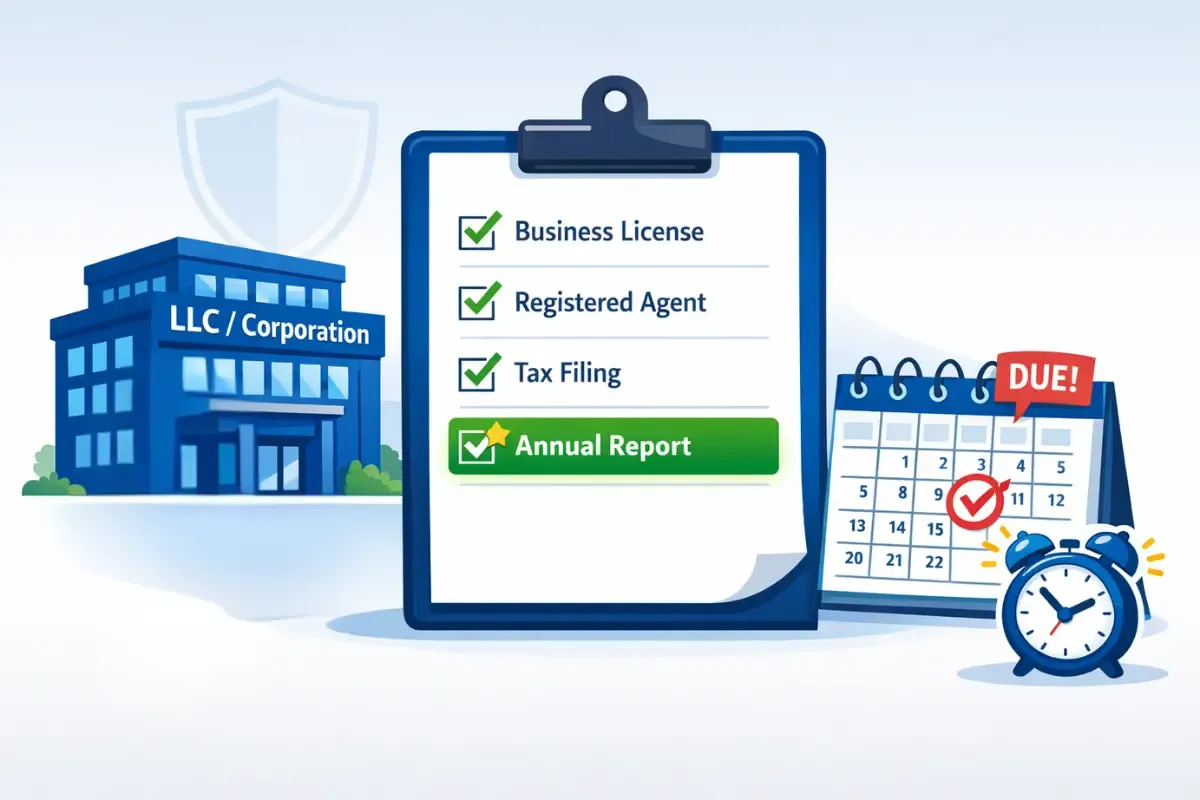
Every corporation and LLC must file periodic reports with state authorities to keep entity records current. These filings update officer names, business addresses, and other information required by states for public records. While specific due dates and fees vary by jurisdiction, all entities must adhere to these requirements to remain in good standing with their formation states and any states where they qualify to do business.
The obligation to file resides with the entity itself rather than individual owners. Missing deadlines triggers consequences ranging from immediate financial penalties to administrative dissolution. Understanding these risks and implementing systems to prevent missed filings helps businesses maintain good standing and avoid operational disruptions.
Key Takeaways
Missing annual report filing deadlines can trigger late fees, loss of good standing, and eventually administrative dissolution, even when a business is otherwise healthy and profitable.
Losing good standing limits access to financing, disrupts contract opportunities (including government contracts), and can block foreign qualification and multi-state expansion plans.
Prolonged delinquency and dissolution can increase personal liability risk for owners by undermining corporate formalities that support limited liability protection.
Reinstating a delinquent or dissolved entity often requires catching up all past-due reports, paying accumulated penalties, and addressing tax and documentation issues, making it more expensive than staying current.
Using systematic deadline tracking and professional annual report filing services helps businesses maintain compliance in all states where they operate and avoid costly disruptions.
Immediate Assessment of State Late Fees and Penalties
Understanding what happens if an annual report is late helps business owners recognize the immediate financial impact of missed deadlines. Most states impose financial penalties once the Annual Report Filing deadlines pass. These penalties represent separate charges beyond original filing fees and must typically be paid before entities can return to active status. Fixed penalty amounts vary by state, with some jurisdictions calculating penalties based on the length of delinquency.
Filing deadlines and fees vary substantially across states. Most fees range from $10 to $150 (though some states charge $300 or more), and missing deadlines can lead to substantial late fees or administrative dissolution. States have specific rules governing their filing requirements, so it is important to check Secretary of State websites for location-specific regulations.
Late penalties accumulate over time in jurisdictions using progressive penalty structures. Initial late fees may start modestly but increase if filings remain outstanding for extended periods. Some states double or triple penalties for missing annual report filings by entities that are delinquent beyond specific timeframes. These escalating costs can quickly exceed original filing fees, creating significant unexpected expenses for business compliance efforts.
Loss of Good Standing and Its Operational Impact
Missing deadlines results in entities being listed as "not in good standing" or "delinquent" in state records. Understanding how late filings affect LLCs and corporations reveals the operational barriers they create. This status change appears in public databases accessible to anyone searching for entity information. Lack of good standing hinders entities' ability to obtain Certificates of Good Standing, which many significant business milestones require.
Delinquent status creates operational barriers affecting various business activities. Partners, lenders, and government agencies commonly verify entity standing before entering into agreements or providing services. Public records showing a delinquent status undermine professional credibility during due diligence, potentially costing business opportunities.
Understanding annual reports clarifies why states require these filings and how they affect entity operations. Good standing represents more than an administrative formality—it provides evidence of sound corporate management and a commitment to regulatory compliance.
Difficulties with Business Financing
Lenders and banks commonly require proof of good standing before approving loans, lines of credit, or other financing arrangements. Certificate of Good Standing documents verify entities maintain active status and comply with state requirements. Without these certificates, financing applications face delays or denials regardless of business financial strength.
Delinquent status signals potential management problems to financial institutions. Banks view compliance with filing obligations as an indicator of overall business organization and reliability. Entities unable to maintain basic state compliance raise concerns about their ability to meet loan obligations or manage finances responsibly.
Financing delays caused by delinquent status can derail time-sensitive business opportunities. Equipment purchases, expansion plans, or strategic acquisitions that require financing may become impossible if entities cannot obtain good-standing certificates. Restoring status and obtaining certificates takes time, which can lead to missed opportunities.
Challenges in Contract Negotiations
Potential partners, government agencies, and large corporate clients often verify entity status before entering formal agreements. Many organizations include good-standing requirements in their vendor qualification processes or partnership criteria. Delinquent status discovered during due diligence can eliminate entities from consideration for contracts or partnerships.
Government contracts, in particular, require documented good standing. Federal, state, and local agencies commonly mandate certificates of good standing as a prerequisite for bid submissions or contract awards. Entities unable to provide current certificates cannot participate in government procurement opportunities regardless of their qualifications or pricing.
Professional Corporations and service businesses face reputational risks when clients or prospects discover delinquent status through public record searches. Professional credibility suffers when basic compliance requirements go unmet, potentially affecting client retention and new business development.
Risk of Administrative Dissolution
If annual reports remain unfiled for extended periods, Secretaries of State may administratively dissolve entities. This state-initiated action formally terminates entities' Legal Existence in their jurisdictions. Administrative dissolution is a procedural consequence of statutory failure rather than an immediate existential threat, but it carries serious implications for business operations.
Dissolution timelines vary by state. While some jurisdictions may act within months, most provide longer grace periods before dissolution (for example, California typically allows 12 months of delinquency, Delaware 2+ years, Texas 120 days plus notice period, and New York 2 years). Regardless of the timeline, dissolution constitutes a serious compliance failure that requires formal reinstatement processes to correct.
Understanding how to file annual reports helps prevent situations that could lead to administrative dissolution. Proper deadline-tracking systems ensure that entities submit filings before states initiate dissolution proceedings.
Potential Personal Liability Risks
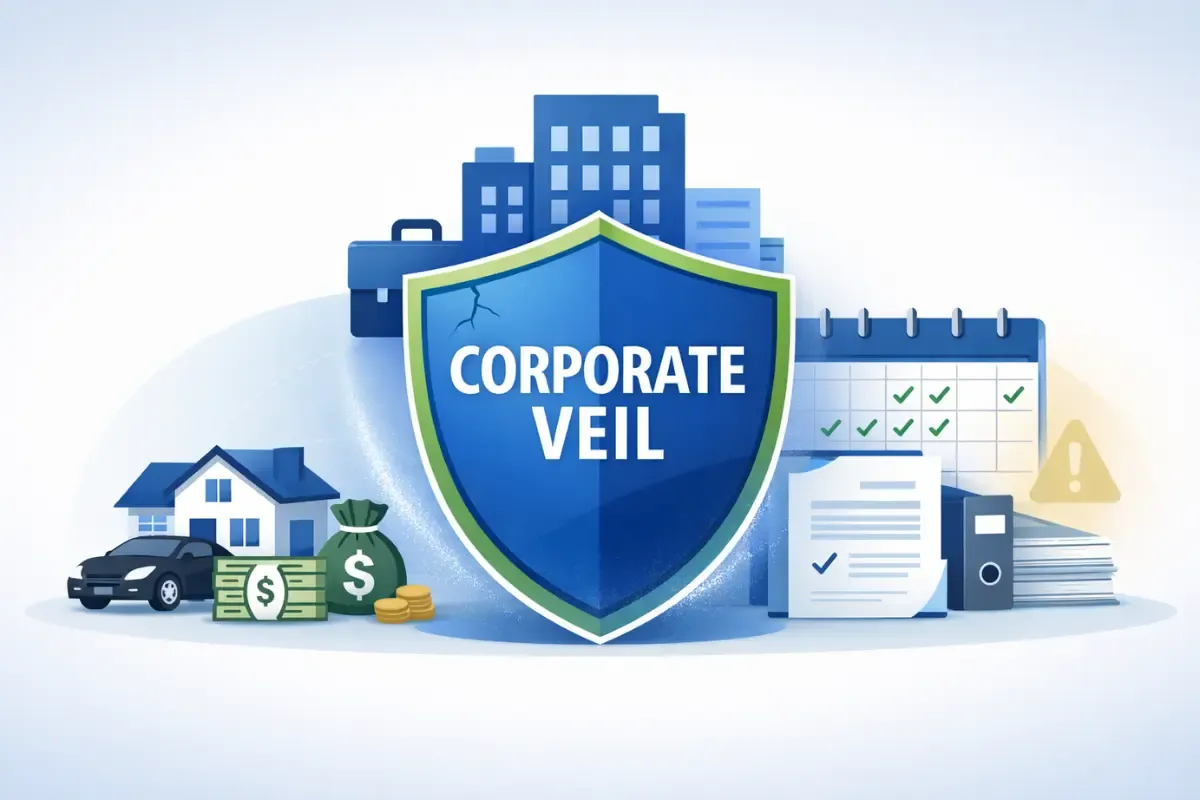
When entities are dissolved or lose active status, corporate veils that help limit personal liability may be weakened, particularly when combined with other factors such as commingling funds or undercapitalization. Maintaining entities' formal structures through timely filings represents a key component of preserving limited liability protection. While a single missed filing rarely pierces the corporate veil, a pattern of consistent neglect of corporate formalities increases legal risk and can support veil-piercing claims in court.
Courts examining personal liability claims consider whether owners maintained proper corporate separation. Regular compliance with state requirements, including timely Annual Report Filing, demonstrates commitment to maintaining entity structures. Patterns of non-compliance suggest owners treat entities as alter egos rather than separate legal persons.
Dissolved entities lose legal authority to conduct business in their states. Owners who continue business activities through dissolved entities may face personal liability for obligations arising from unauthorized operations. Creditors and claimants can argue that owners abandoned corporate formalities, thereby justifying the piercing of corporate veils.
Complications with Foreign Qualification
Entities authorized to do business in multiple states through foreign qualification must typically remain in good standing in their home states. Failure to file the information in the states where it is required can trigger chain reactions, leading to loss of authority to conduct business in other jurisdictions. Foreign states commonly require entities to maintain active domestic status as a condition of foreign qualification.
Foreign qualification requirements vary by state but generally include verification of domestic good standing. When home states revoke entities' good standing, foreign states may automatically suspend foreign qualifications or require immediate status corrections. Multi-state operations face compounding compliance challenges when domestic filings lapse.
The administrative burden of restoring status across multiple states simultaneously creates significant work and expense. Each state requires separate reinstatement forms, fees, and documentation. Coordinating reinstatements across jurisdictions while maintaining business operations, taxes, resources, and diverting attention from revenue-generating activities.
Loss of Name Rights and Brand Identity
Some jurisdictions allow administratively dissolved entities to lose exclusive rights to business names. Maintaining the business name and brand after missed filings becomes challenging once the names become available for other businesses to register. Once names become available, other businesses can register them, complicating the original entities' efforts to reinstate them. Maintaining active status is the most efficient way to protect an entity's identity in state records.
Name availability varies by state, but most jurisdictions make the names of dissolved entities available after specific periods. New entities can reserve or register these names, creating conflicts when the original entities attempt to be reinstated. Recovering names may require negotiating with new registrants or selecting alternative names, which could affect brand continuity.
Nonprofit corporations and organizations with established community recognition face particular challenges when losing name rights. Years of brand development and community relationships can be undermined by administrative dissolution, which allows other organizations to register the name. Protecting organizational identity requires maintaining good standing through consistent Annual Report Filing.
Barriers to Scaling and Expansion
Entities must be in good standing to file for foreign qualification in new states. The impact of missed annual reports on expansion and contracts extends beyond immediate penalties to affect long-term growth strategies. Administrative delinquency in domestic states stalls growth plans and expansion into new markets. States deny foreign qualification applications from entities not maintaining active domestic status, blocking geographic expansion until compliance issues are resolved.
Positioning timely filing as a fundamental requirement for maintaining operational flexibility helps business owners prioritize compliance. Expansion opportunities arise unexpectedly, and entities unable to act quickly due to compliance deficiencies may miss competitive advantages. Maintaining good standing ensures readiness to grow when opportunities arise.
California’s annual reporting requirements illustrate state-specific complexity that affects expansion planning. Each jurisdiction maintains unique rules, deadlines, and penalties. Multi-state operations require tracking numerous obligations simultaneously, making systematic compliance management valuable.
The Reinstatement Process and Associated Costs
Returning delinquent or dissolved entities to active status requires filing all past-due reports and paying accumulated penalties. Restoring business status after missed reports typically requires paying back taxes, original filing fees, and all accumulated penalties from delinquency periods. Some states also require formal Applications for Reinstatement, carrying separate processing fees.
Tax return obligations continue during delinquency periods even when entities file no annual reports. States may require entities to demonstrate tax compliance before accepting reinstatement applications. Gathering historical tax documentation and ensuring all tax filings are current adds complexity to reinstatement processes.
Reinstatement costs can substantially exceed amounts that would have been paid through timely compliance. Late fees, penalties, professional fees for preparing reinstatement applications, and administrative costs of gathering historical documentation all contribute to total reinstatement expenses. Preventive compliance proves more economical than reactive reinstatement.
How Professional Monitoring Supports Compliance
Professional service providers help track varying deadlines across different states. Avoiding legal and financial risks from delinquent filings becomes easier with automated systems providing notifications, reducing the risk of accidental oversights. The EntityWatch® compliance system offers deadline tracking across all jurisdictions and sends alerts to ensure entities receive advance notice of upcoming filing requirements.
While these tools help manage filing requirements, entities remain responsible for ensuring information is submitted. Professional services facilitate compliance but do not eliminate entity accountability for meeting statutory obligations. Using calendar reminders and professional monitoring provides multiple safeguards against missed deadlines.
Understanding the difference between annual reports and operating agreements helps business owners recognize that annual reports are ongoing. Operating agreements establish initial governance, while annual reports represent recurring state filing obligations that require ongoing attention throughout the entity's life.

Stay Compliant – Explore Annual Report Filing Services Today
Missing Annual Report Filing deadlines has serious administrative and financial consequences, but these risks are avoidable with proper planning. Implementing systematic tracking, using professional services, and prioritizing business compliance helps entities maintain good standing across all jurisdictions where they operate.
InCorp's annual report filing services and EntityWatch® system help entities efficiently manage state requirements. Professional support that maintains good standing across all jurisdictions allows business owners to focus on operations while ensuring compliance obligations are consistently met. State's Office requirements vary significantly, making professional guidance valuable for multi-state operations.
Contact InCorp's specialists for professional support in maintaining your entity's good standing. Explore InCorp's compliance services and discover how systematic compliance management protects your business from penalties, dissolution, and operational disruptions caused by missed filings.
FAQs
Disclaimer
This content is intended for general educational and informational purposes only and does not constitute legal, tax, or accounting advice. Every effort is made to keep the information current and accurate; however, laws, regulations, and guidance can change, and no representation or warranty is given that the content is complete, up to date, or suitable for any particular situation. You should not rely on this material as a substitute for advice from a qualified professional who can consider your specific facts and objectives before you make decisions or take action.
Stay Informed!
Sign up to receive important updates, helpful resources, and special offers.